
The Key to Economic Development: Getting Back to Basics

the-oval-beer-garden3-2014-920vp-900x0
Pop-up park on the Benjamin Franklin Parkway in Philadelphia (Credit: M. Fischetti for Visit Philadelphia)

A recent quote about Akron, from the “62.4 Report” written by the Greater Ohio Policy Center, struck me: “While the city has done a good job of building and marketing itself as a great place to work and play, it has done less to boost itself as a good place to live.”

Akron, certainly, isn’t alone in the problem. Many cities, include Philadelphia where I live, focus a lot of their attention on boosting pop-up parks, a first-class restaurant scene, bike-share systems, and other programs to attract “millennials” (what I think is coded language for well-off, young, white professionals and not a generation as a whole).

City leaders and officials focus on these kinds of programs because they’re relatively cheap and easy to accomplish. Their quick to get done before the next election, and they make young so-called urbanists happy.

But, according to new research by Gary Sands of Wayne State University and Laura Reese of Michigan State University, these schemes may have little economic impact. What city leaders should focus on, instead, are things like education, safe drinking water, a good transit system, and public safety. If a city can’t get the basics right, it won’t be good places to live.

According to the Detroit Free Press, “[Sand and Reese] have completed new research that calls into question almost all of the economic development tactics that Rust Belt cities have thrown at decline over the years, including casinos and programs aimed at luring the so-called creative class. They found little or no relationship between those trendy investments and broader community-wide economic growth.”

The researchers aren’t arguing that pop-ups and bike lanes are bad, and neither would I. But it cities with a poverty or education crisis, they do little to improve the overall economy. I’m so happy to see city leaders and researchers starting to think longer into the future.

Sands and Reese are working on a book, which should come out in 2017, on this topic that I cannot wait to read.

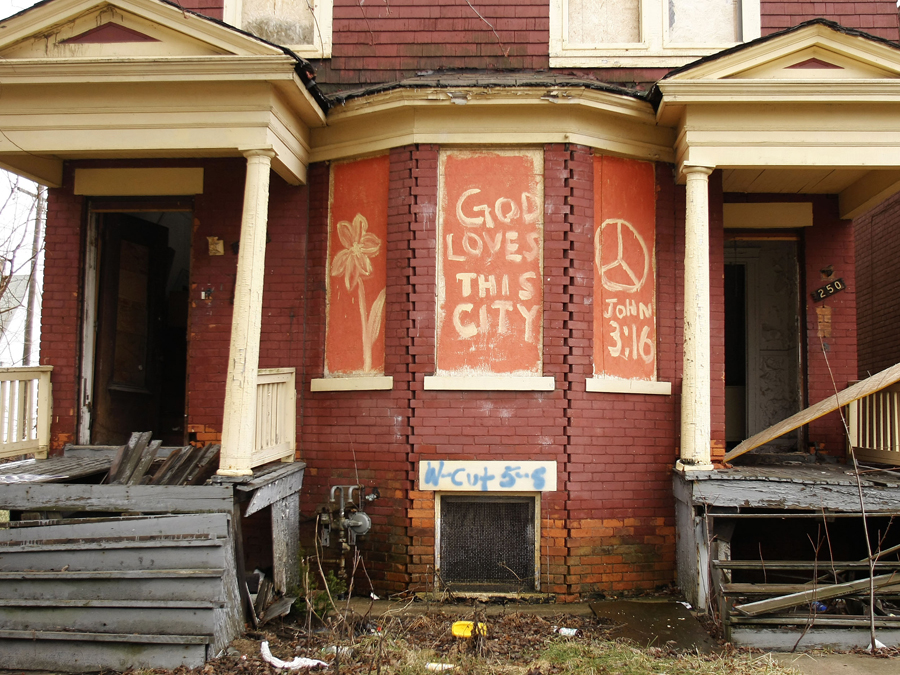
Dispatches Against Displacement Shows Us S.F.’s Housing War Is Winnable

Dispatches Against Displacement

In September 2013, San Francisco artist Guillermo Gómez-Peña wrote an open letter to fellow artist Rene Yanez, considered “Royalty” of the Mission art scene, who was being evicted from his home of 35 years.

I don’t even know how to begin this letter…we are outraged! All of us, artists, writers and activists in San Francisco are outraged that you Padrino, your beloved Cynthia, our dear Yolanda Lopez and Rio Yanez, the whole Yanez-Wallis-Lopez clan, puro Chicano royalty, are being evicted! After 35 years in your home, and just when you and your loved ones have become ill and vulnerable, the base from which you’ve supported a lifetime of making art and promoting the art careers of so many others is being cruelly pulled out from under you. You are being physically and culturally evicted, along with so many others in San Francisco. It’s an outrage, it’s tragic, and sadly it’s all too common in this merciless city that seems to care nothing for those who’ve helped to make it what it once wanted to be.

The anger and betrayal felt in this letter is not uncommon in San Francisco. The city has gone through an extreme amount of change. And while seemingly everyone has a idea for how to fix San Francisco’s housing crisis, few can match the history, context and solutions that James Tracy outlines in his latest book, Dispatches Against Displacement: Field Notes from San Francisco’s Housing Wars.

Dispatches excels in three main areas: first-person accounts by those affected by displacement, a clear connection between neoliberal housing policy and outcomes, and possible solutions to San Francisco’s housing crisis.

In Dispatches, powerful stories, like Guillermo’s above, are featured throughout. The fear, anger and despair people feel is chronicled in striking detail. Take, for example, Tracy’s explanation of Clinton’s “One Strike and You’re Out” law and its affects narrated by housing activist Bethola Harper:

In 1996, President Clinton signed into law a bill designed to accelerate evictions in public housing. Dubbed “One Strike and You’re Out” it was touted as a way to stop drug trafficking and violent crimes in public housing developments. Since One Strike was a civil procedure, tenants could be evicted even if they were acquitted of criminal charges. In effect, what One Strike did was provide an excuse for eviction based solely on innuendo and allegations of criminal activity. Housing authorities across the country evicted entire households based on the arrest of one member. In one case, a grandmother was brought to court after her grandson, whom she hadn’t seen in several years, was arrested on drug possession charges in the neighboring county.

So what was the outcome of such a law?

North Beach tenant activist Bethola Harper explained the game: “We learned that we couldn’t sign anything without it being used against us. We learned that agreements we made with the Housing Authority were meant to be broken as soon as they could demonstrate enough tenant support to satisfy HUD. Most importantly, we learned never to air out any differences in front of the city. If we had to argue, we needed to meet amongst ourselves to work out our own problems. They were always looking for ways to spread rumors and pit the races against each other. The end goal was to get as many of us out, and pay for as little relocation as possible.”

As with the One Strike law, Tracy keenly ties together policy and outcome. Take Tracy’s explanation of the devastating public housing policy, HOPE VI:

In the late 1980s, then-Secretary of Housing and Urban Development Jack Kemp announced the creation of the Housing Opportunities for People Everywhere (HOPE) program, which would tear down public housing and rebuild it. HOPE was intended to move the feds out of housing provision by transferring ownership to resident cooperatives. Kemp’s cocktail was infused with doses of privatization and austerity, yet it wasn’t a roadmap for displacement. Homes would have to be replaced on a one-to-one basis. It assumed and allowed for most residents to return. If the federal government, like a father in a divorce, left the house, it at least tried to leave it in good working order.

However:

Since 1992, the US Department of Housing and Urban Development (HUD) has awarded 446 HOPE VI grants in 166 cities. A 2004 study found that only 21,000 units had been built to replace the 49,828 demolished units.5 In other words, only forty-two percent of the demolished public housing has been replaced. Other estimates put the loss higher, suggesting fifty percent of the public housing stock has been slashed.

What’s more:

Democratic president Bill Clinton removed most of the hope from the HOPE program when, in 1995, requirements for resident participation, return, and unit replacement were stricken from the federal record. Smaller developments meant that not every family even had a place to return. In reality, what often happened was that the reconstruction was delayed or abandoned altogether, or the ‘mixed income’ residency requirements caused the poorest of the tenants-those most in need of subsidies‚ and lose their homes.

Housing activists are regularly accused of being void of solutions and anti-development zealots who want the neighborhood to stay bad. Sharply avoiding this characterization, Tracy explains policies and practices that would have, or will, preserve and create affordable housing in neighborhoods facing gentrification, not on in San Francisco, but everywhere.

“The most tragic part of HOPE VI is that it was a perfect example of how ideology stole an opportunity to put a meaningful dent in national poverty,” writes Tracy. “The majority of the alternatives were not complicated or even very expensive. First, Congress could have easily maintained the one-for-one replacement requirements jettisoned in 1995, and guaranteed all residents the right to return, if desired. The influx of many millions of dollars of public money should have been used in an aggressive jobs program giving residents the chance to advance in the trades, as well as access to post-construction job opportunities.”

Beyond policy, Tracy advocates for tools like participatory budgeting, and says, “it engages everyday people and builds a basis of social solidarity; it can, under the right circumstances expose, rather than obscure, the political economy of cities.”

Urban policy in the United States has been trapped in the cage of private market logic. In practical terms, this means that development that serves the interests of the majority of people will be secondary to that serving the minority. It is important for organizers to fight for fundamental changes in how housing is shared, rather than just advocating for more rights in the existing balance of power. Today, little affordable housing is built unless a greater amount of luxury housing is first produced.

Dispatched Against Displacement is a refreshing reminder that San Francisco’s housing crisis didn’t happen by accident (it was policy-driven), and that market-based, supply-side arguments simply won’t do. I loved this book and will come back to it year after year to remind myself that the struggle for the right to housing, and the city, is in full force and we will win.

Medicare, Medicaid Responsible for Decrease in Uninsured Rate, Not Obamacare

Single-Payer Medicare for AllThe number of people without health insurance dropped slightly in 2011 from 50 million to 48.6 million people–a decrease Democrats are eager to pounce on as proof that Obamacare is working.

“Thanks to Obamacare, the ranks of the uninsured fell this year,” writes Kevin Drum for Mother Jones Magazine.

“Attention Obamacare haters: The law you despise appears to be working,” says the New Republic.

Larry Levitt of the Kaiser Family Foundation proposes that, “The biggest decline in the ranks of the uninsured is among young adults aged 19-25. This suggests that the Affordable Care Act (ACA) provision allowing young people up to age 26 to stay on their parents’ policies is succeeding at increasing the number of people with health insurance.”.

If Larry Levitt’s theory was correct, however, then the total number of people with private insurance would have increased. But the Census Bureau tells us that, “Both the rate and number of people covered by employment-based coverage in 2011, 55.1 percent and 170.1 million, were not statistically different from 2010.”

True, private coverage among people between 19 and 25 increased by 539,000 people. 40 percent (215,600) of those people obtained coverage through their parent’s health plan. But again, the total number of people with private insurance stayed the same–meaning there is little reason to assume the ACA has had any impact yet.

So how did the number of uninsured decrease by 1.3 million people?

Simple: people are getting older and poorer. Therefore, a much stronger case can be made that already existing government programs (Medicare and Medicaid), not Obamacare, are responsible for increased health coverage.

Uninsured Totals
[Chart: Health Insurance Coverage Status and Type of Coverage by Age: 2010 and 2011 (click to enlarge)]

Unlike private insurance, “The number of people covered by government health programs increased to 99.5 million from 95.5 million.” Essentially, 2 million people were added to Medicaid (50.8 million) and 2 million people were added to Medicare (46.9 million) in 2011.

Steady poverty and unemployment resulting in decreased median income for everyone except the rich means more people are eligible for Medicaid (thus the 2 million person increase). The poverty rate remained at 15 percent, meaning 46.2 million people were living in poverty in 2011. Wages fell for the majority of Americans and inequality between the rich and poor increased. The Center on Budget and Policy Priorities explains that:

“For the 20 percent of households in the middle, average household income fell 1.7 percent, or $876. For the top 20 percent, average income rose 1.9 percent, or $3,286. For the top 5 percent of households, average income rose 5.1 percent, or $15,184. Incomes fell for the bottom four-fifths of American households, while rising only for the top fifth.”

Right now, Obamacare requires states to maintain their current eligibility levels for Medicaid (meaning they are not allowed to drop people from coverage), but all this does is maintain the status quo–it doesn’t insure new people. Income eligibility is supposed to increase to 133 percent of the federal poverty level by 2014, but the Supreme Court decision on Obamacare makes that unlikely to happen in every state. Therefore, decreased income and the steady erosion of employment-based insurance are likely the reason for increased Medicaid roles.

Medicare’s eligibility age wasn’t lowered and stayed at 65 under Obamacare so that’s not the cause for higher enrollment. According to the Washington Post, “The portion and number of Americans covered by Medicare continued to rise, as more baby boomers entered retirement age.”

Again, 4,000,000 people were added to Medicaid and Medicare (which have existed for 47 years) in 2011 while only 215,600 people were covered by the Obamacare’s young person provision (which has existed for 1 year).

It should be clear by now that major gains in health insurance coverage came from an increase in government health insurance coverage. Either way, we have a lot more work to do before we end the US healthcare crisis.

48.6 million people are currently uninsured. 48,000 people will die this year because they don’t have health insurance. Job-based insurance premiums for a family of four increased 4 percent last year and nearly doubled since 2002. This is a tragedy, not cause for celebrating Obamacare.

Even when Obamcare is fully implemented in 2014, the Congressional Budget Office estimates that 30 million people will still be uninsured. Healthcare and drug costs will continue to rapidly rise–as is happening under the Massachusetts plan from which Obamacare is modeled. And a dozen governors plan to ignore Obamacare‘s Medicaid expansion to 133% of the federal poverty rate in their states. Yet the Democrats have no plans to strengthen Obamacare.

According to the Democratic platform released at the Democratic National Convention this month, there are no calls for waivers to allow for state single-payer. There’s not even a mention of a public option. As Jon Walker of Fire Dog Lake says, “The platform of the Democratic Party is basically that the ACA is great how it is and there is very little need to improve it.”

We know it doesn’t have to be this way. With a national single-payer health program we’d cover everyone living in the US and save $500 billion a year. President Obama knows this is true and that single-payer is the solution.

Stuart Altman, President Nixon’s former health aid and advisor to Obama in the lead up to health reform recently recalled that, “Every once in awhile Obama would say, ‘Wouldn’t single-payer be simpler?’ The answer is yes. But America wasn’t ready for it.”

America is not only ready for a national, single-payer healthcare plan, it desperately needs one. Yet, despite all that Medicare and Medicaid has done to protect the most vulnerable, cuts to these programs loom no matter who wins the election next month. Those who believe in the right to healthcare should defend these programs at all costs.

Jeff Muckensturm is on the national staff of Healthcare-NOW!, a national network of single-payer advocates and organizations. Find out more about the single-payer movement at www.Healthcare-Now.org.